
Every few years, someone predicts email marketing is finally dying. It never does — because it’s still one of the only marketing channels a business fully owns, with no algorithm deciding who gets to see your message. This guide answers what is email marketing in plain terms, walks through where it’s headed in 2026, and shows exactly how growing businesses are using it to turn casual subscribers into repeat customers.
What Is Email Marketing, Exactly?
Email marketing is the practice of sending targeted, permission-based messages to a list of subscribers with the goal of building relationships, promoting products, and driving revenue. Unlike social media, where reach depends entirely on a platform’s changing algorithm, an email list is an asset you actually own — nobody can quietly bury your message in a feed.
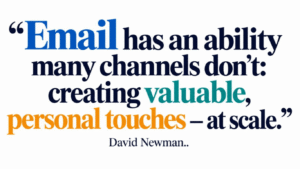
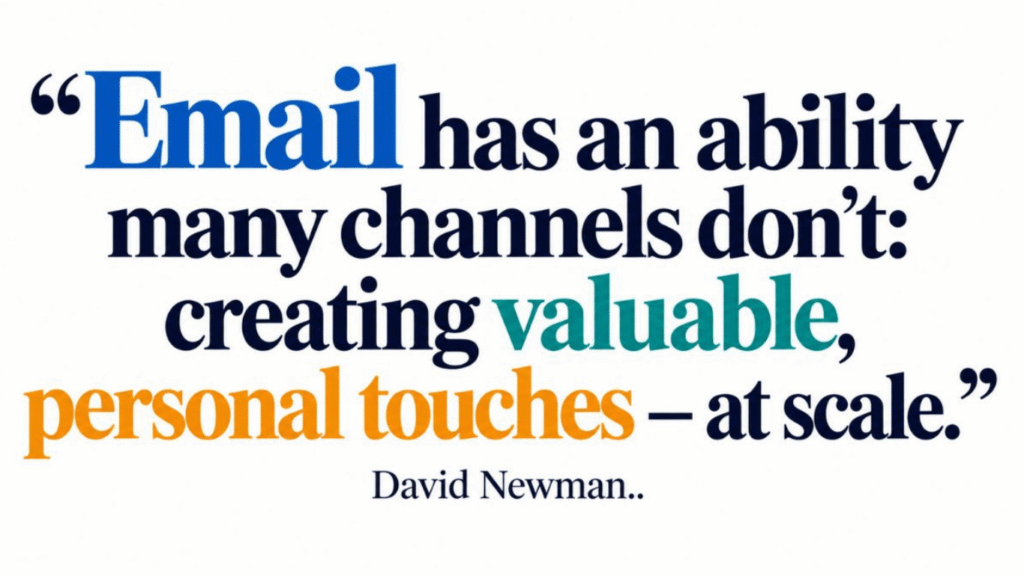
David Newman captures why this channel has stayed relevant for over two decades: “Email has an ability many channels don’t: creating valuable, personal touches — at scale.”
That combination — genuine personalization without losing scale — is exactly why email marketing keeps outperforming newer, flashier channels year after year.
A Brief History of Email Marketing
Understanding email marketing history helps explain why the channel has evolved the way it has. The first mass marketing email is widely credited to 1978, sent to a few hundred recipients and reportedly generating millions in sales — an early signal of the channel’s outsized return on investment. Through the 1990s and 2000s, email marketing matured alongside spam regulations like the CAN-SPAM Act, which forced businesses to earn permission rather than blast unsolicited messages.
The past decade shifted the focus again — from single mass blasts toward segmentation, automation, and personalization at scale. Heading into 2026, AI-assisted subject lines, send-time optimization, and predictive segmentation have become standard rather than cutting-edge, continuing a pattern of the channel adapting rather than disappearing.
What Types of Email Are There?
A common question for anyone starting out is simply what types of email are there to choose from. The main categories businesses rely on:
- Newsletters — regular updates that keep a brand top of mind without a hard sales pitch every time
- Promotional emails — direct offers, discounts, or product launches
- Transactional emails — order confirmations, shipping updates, receipts
- Welcome sequences — automated messages triggered when someone joins a list
- Re-engagement emails — targeted at subscribers who’ve gone quiet, aiming to win back attention before they unsubscribe entirely
- Lead nurture sequences — a series of emails designed to move a prospect closer to a purchase decision over time
Most effective email programs blend several of these types rather than relying on just one.
Why Email Marketing Still Works in 2026
It’s worth pausing on why this channel keeps delivering results when so many others fade.
As UpscoreTech’s Founder and CEO puts it: “It’s genuinely hard to find someone who uses the internet but doesn’t use email — and when email is your marketing channel, reaching the right customer becomes far more certain.”
That’s really the whole case in one sentence. Nearly every internet user checks email regularly, and unlike a social post that disappears within hours, an email sits in an inbox until it’s actually opened or deleted. For businesses trying to reach a specific, already-interested audience without paying for ad placement every single time, that reliability is hard to replace.
Building the Right Email Marketing Audience
Growing a list is only half the job — building the right email marketing audience matters more than list size alone. A smaller list of genuinely engaged subscribers who opted in because they care about your product will consistently outperform a much larger list bought or scraped from somewhere else. Segmenting your audience by behavior — purchase history, engagement level, browsing activity — allows you to send relevant messages instead of the same blast to everyone, which is exactly what keeps open rates and click-through rates healthy over time.
The math behind this is straightforward once you look at it. Inbox providers like Gmail and Outlook don’t just look at whether someone’s on your list — they track how recipients actually respond. If a big chunk of your list ignores or deletes your emails, that behavior gets read as a signal, and it can quietly tank your deliverability for everyone on that list, including the people who genuinely want to hear from you. A bloated, disengaged list doesn’t just underperform; it actively drags down the emails landing in the inboxes of your best customers.
This is where quality-over-quantity stops being a cliché and starts being a strategy. Instead of chasing every possible signup, the goal is attracting people who are already a fit — through gated content that speaks to a specific problem, a lead magnet tied to an actual buying stage, or an opt-in form that sets honest expectations about what they’ll receive and how often. People who join that way tend to stick around, open more, and eventually buy more, because the relationship started with something they actually wanted.
Segmentation is what turns that initial quality into ongoing relevance. A first-time visitor who downloaded a guide needs a different message than a repeat customer who just abandoned a cart, and both need something different from someone who hasn’t opened an email in three months. Behavioral segments let you match the message to where someone actually is, rather than guessing based on when they joined your list. Even simple segmentation — active buyers, browsers, and lapsed subscribers — can noticeably shift your open and click rates within a few campaigns.
Ultimately, the size of an email list is a vanity metric until it’s filtered through engagement and relevance. A smaller, well-segmented audience that actually wants to hear from you will out-earn a massive, indifferent one every time — and it’ll keep your sender reputation healthy enough to keep doing it.
Email Marketing for Lead Generation
Used well, email marketing for lead generation remains one of the highest-return tactics available to a growing business.
Ryan Deiss puts it plainly: “The money is in the list, but the fortune is in the follow-up. The right emails turn subscribers into lifelong customers.”
That follow-up piece is where most businesses leave value on the table. A single welcome email isn’t a nurture sequence — a properly built follow-up series, spaced out over days or weeks, consistently converts more leads into paying customers than a one-off blast ever will, because it gives a prospect multiple touchpoints to build trust before they’re asked to buy.
E-Commerce Email Marketing Pain Points and Solutions for 2026
Online stores face a specific set of challenges, and understanding the common e-commerce email marketing pain points and solutions for 2026 helps avoid wasted spend. Cart abandonment remains the biggest one — the solution is a timed, automated recovery sequence rather than a single reminder email. Inbox fatigue is another growing issue as more brands compete for attention, solved by tighter segmentation rather than sending to an entire list every time. Deliverability has also become more sensitive with tightening spam filters in 2026, making list hygiene — regularly removing unengaged subscribers — a bigger priority than it used to be.
Advanced Email Marketing Techniques
Once the basics are solid, a few advanced email marketing techniques separate strong programs from average ones: dynamic content that changes based on subscriber data, predictive send-time optimization that delivers each email when an individual subscriber is statistically most likely to open it, and behavioral trigger sequences that fire automatically based on a specific action rather than a fixed schedule. These techniques require more setup than a basic newsletter, but they consistently produce stronger engagement once implemented correctly.
Building an Email Marketing Strategy That Converts
A solid strategy for email marketing starts with a clear goal — list growth, sales, retention — since the right tactics differ depending on which one you’re optimizing for. From there, the process generally follows: define your audience segments, map out a content calendar mixing value-driven and promotional emails, set up automated sequences for key moments like welcome and abandonment, and review performance data monthly to refine what’s actually working rather than guessing.
This is exactly the kind of strategy work our team at UpscoreTech builds for clients — mapping the right sequence and segmentation for your specific audience rather than applying a generic template.
Why Hire an Email Marketing Agency?
Considering email marketing agency services makes sense once a business outgrows sending occasional newsletters manually. An experienced agency brings segmentation expertise, deliverability management, and automation setup that most in-house teams don’t have the bandwidth to build from scratch. The difference usually shows up in the numbers — professionally managed campaigns consistently see stronger open rates, lower unsubscribe rates, and meaningfully higher revenue per email sent compared to ad hoc, self-managed efforts.
Final Thoughts
Email marketing isn’t just surviving into 2026 — for businesses that treat it as more than an occasional newsletter, it remains one of the highest-return channels available. The gap between a basic email list and a genuinely strategic program comes down to segmentation, follow-up, and consistent optimization, not just sending more emails more often.
If you’re ready to see what a properly built email program could do for your business, UpscoreTech can map a strategy around your specific audience rather than a generic template.
Frequently Asked Questions
What is email marketing in simple terms?
Email marketing is sending targeted, permission-based messages to a subscriber list to build relationships and drive sales — a channel you fully own, unlike social media reach controlled by an algorithm.
What types of email should a business actually send?
Newsletters, promotional offers, transactional confirmations, welcome sequences, and re-engagement emails together cover most of what an effective email program needs.
Is email marketing still effective for lead generation in 2026?
Yes — with a properly built follow-up sequence rather than a single email, it remains one of the highest-return channels for turning subscribers into paying customers.
When does it make sense to hire an email marketing agency instead of managing it in-house?
Once a business outgrows occasional manual newsletters and needs real segmentation, deliverability management, and automated sequences — tasks that usually require dedicated expertise most in-house teams don’t have time to build.