
For a small business owner running a shop or a local agency in Padova, stepping into the digital marketing world can feel incredibly overwhelming. Everywhere you look, giant corporate brands with massive marketing budgets are bidding on the exact same search terms you need. Advertising costs seem to creep higher every month.
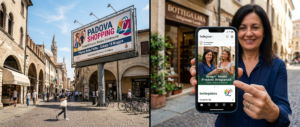
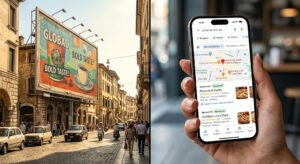
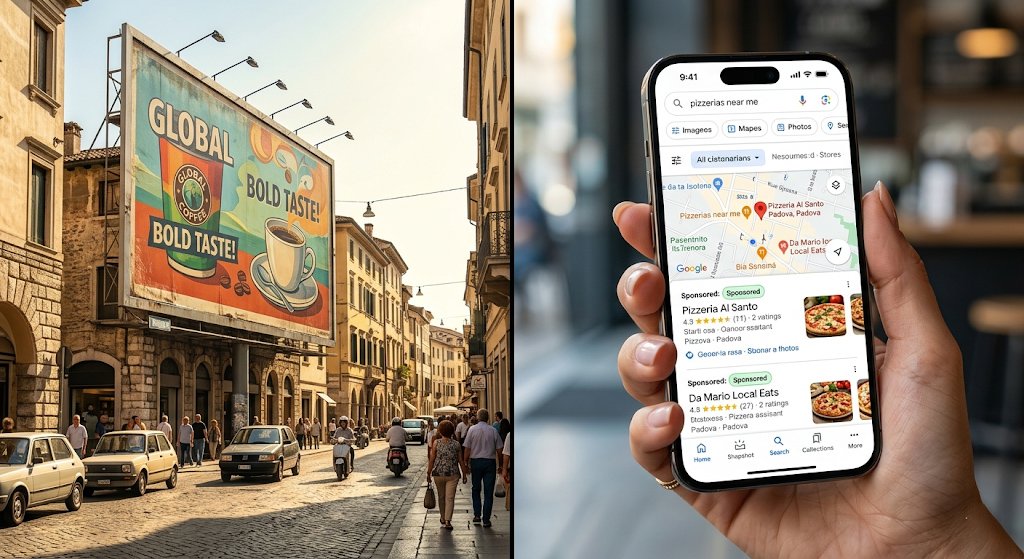
In this kind of environment, the old “spray and pray” approach to advertising—where you write a big check for a generic billboard on Via Venezia or throw money at broad, unmonitored Facebook ads hoping for a miracle—is a fast track to draining your business bank account.
Today, performance marketing is the only sustainable path forward for a lean, agile local business. It is a highly deliberate, trackable approach where every single Euro you spend is tied directly to a clear business result, like a phone call, a completed contact form, or an in-person visit to your shop.
Whether your business operates out of a historic brick-and-mortar storefront in the Centro Storico, a bustling industrial facility in the ZIP district (Zona Industriale Padova), or a vibrant neighborhood hub like Arcella, Forcellini, or Guizza, you do not need a multi-million Euro corporate budget to compete and win. What you need is a smarter, more efficient digital infrastructure.
This comprehensive, real-world guide will show you exactly how to build an affordable, high-performing marketing engine that protects your cash flow and brings in a steady stream of local customers.
1. What Exactly is “Performance Marketing” for a Local Business?
To understand why this approach works, we first need to contrast it with traditional brand marketing. When a giant company like Safilo or a major automotive brand runs an ad, their primary goal is often “brand awareness.” They want their logo to look beautiful, and they want millions of people to remember their name over the next five years. They have the financial runway to wait years for that investment to turn into a profit.
As a small business in Padova—whether you are a local accountant, a family-owned restaurant, a dental clinic, or a specialized solar panel installer—you cannot afford to wait years for your marketing to pay off. You need your marketing budget to work for you immediately.
+------------------------------------------------------------------------------------+
|                               THE ACCOUNTABILITY GAP                               |
+----------------------------------------------------+-------------------------------+
| TRADITIONAL BRAND MARKETING                        | PERFORMANCE-DRIVEN MARKETING  |
| - High upfront visual production costs             | - Low-cost, high-intent setups|
| - Vague tracking ("Impressions" & "Views")         | - Exact tracking (Form, Call) |
| - Long-term, unmeasurable payback period           | - Daily budget adjustments    |
+----------------------------------------------------+-------------------------------+
| RESULT: Unpredictable cash drain                   | RESULT: Profitable, safe growth|
+------------------------------------------------------------------------------------+
Performance marketing completely flips the script. Instead of paying for vague metrics like “impressions” or “views” (which don’t pay the rent), you design campaigns where you only value definitive actions.
When you adopt this mindset, your entire business changes in three distinct ways:
-
Zero Wasted Ad Spend: You set up your campaigns so that you stop paying for accidental clicks, out-of-town traffic, or people just looking for free advice. Every Euro is tracked down to the exact keyword that generated the inquiry.
-
Real-Time Campaign Tuning: You don’t have to wait for an agency to send you a monthly report to know if your ads are working. If you notice on Tuesday morning that a particular ad headline isn’t bringing in calls, you can pause it or change the text by Wednesday afternoon.
-
True Financial Predictability: Once your campaign stabilizes, you will uncover your true numbers. You will know that, on average, spending €50 on local search ads results in 5 clicks, which turns into 1 booked appointment. Marketing stops feeling like a gamble and starts working like a predictable machine.
2. Breaking Down the Economic Landscape of Padova
To build a marketing strategy that doesn’t waste your money, you must understand the distinct commercial zones of Padova. A generic campaign that works in a suburban town will fail here because Padova’s economy is highly segmented. Let’s look at how your performance marketing should adapt to where your business and customers are located.
The Historic Core (Centro Storico)
Operating a retail boutique, a premium cafe, or a legal studio near landmarks like Piazza delle Erbe, Prato della Valle, or the Scrovegni Chapel comes with specific challenges. Foot traffic is high, but competition is fierce, and physical space is expensive.
[Image: A beautiful, atmospheric street-level photograph of a boutique storefront in Padova's Centro Storico during the evening, highlighting localized window displays and an inviting storefront.]
If you are trying to win clients in this zone, your performance marketing needs to focus heavily on mobile intent. People walking through the historic center or sitting at a café are looking for immediate solutions on their phones. Your tracking and ads must be engineered to capture that instant local demand, leading people straight to your door or booking page.
The Industrial District (Zona Industriale Padova – ZIP)
The ZIP area is one of the largest industrial zones in Europe, home to thousands of manufacturing, mechanical engineering, and international B2B logistics firms. The sales cycle here is completely different from the Centro Storico. Contracts are worth tens of thousands of Euros, decisions involve multiple company stakeholders, and trust takes months to build.
If your business targets companies in the ZIP district, your performance marketing should avoid flashy, emotional consumer ads. Instead, you need to target highly specific corporate search queries. Your campaigns must offer deep value—such as custom technical worksheets, procurement calculators, or clear industrial case studies—to prove your expertise to busy procurement managers before you ever ask for a sales call.
The Residential and Academic Rings
Neighborhoods like Arcella, Forcellini, Guizza, and the areas surrounding the Università degli Studi di Padova have their own unique commercial ecosystems. These areas are packed with local service providers, medical clinics, student housing, and independent trade businesses.
Marketing in these neighborhoods requires hyper-local geographic boundaries. If you are a physiotherapist in Guizza, you don’t want to waste your ad budget paying for clicks from users living in northern Treviso or Venice. Your marketing needs to be tightly locked down to a 3-to-5 kilometer radius around your physical office, maximizing your local relevance and protecting your daily budget.
3. The Foundation: A Low-Cost, Highly Accurate Technical Setup
The single biggest reason small businesses lose money in digital marketing is that their tracking data is broken. If you are running Google or Meta ads without a clean, accurate tracking setup on your website, you are essentially flying blind. You won’t know which ads are driving actual revenue and which ones are just wasting your cash.
Fortunately, building a world-class tracking infrastructure doesn’t require thousands of Euros anymore. You just need to configure a few essential pieces correctly.
+-----------------------------------------------------------------------------------+
|                        MODERN SERVER-SIDE DATA FLOW PIPELINE                      |
+-----------------------------------------------------------------------------------+
|  [ User Action on Site ] ---> [ Secure Cloud Server (Stape) ] ---> [ Google Ads ] |
|            |                                                             ^        |
|            +----> [ Consent Mode V2 Filters Privacy Compliance ] --------+        |
+-----------------------------------------------------------------------------------+
Implementing Consent Mode V2 Without Expensive Software
In Italy and across the European Union, data privacy laws under GDPR are incredibly strict. You cannot legally drop tracking cookies on a visitor’s browser unless they give you explicit permission via your website’s cookie banner. In the past, if a user clicked “Decline,” you lost 100% of that data, making it very difficult to optimize your ad spend.
To solve this, Google introduced Consent Mode V2. When set up properly on your WordPress or Elementor site, this system automatically adjusts how your tracking tags behave based on what the user selects on your cookie banner.
If a visitor declines cookies, Consent Mode V2 switches to an anonymous, cookieless tracking state. It safely passes basic, non-identifiable signal data back to Google’s machine-learning engine. Google’s AI then uses this information to model your conversion data, filling in the gaps safely and legally.
The best part? This doesn’t require a high-priced enterprise software license. You can implement it completely for free using standard tools like standard cookie plugins integrated directly with Google Tag Manager.
Switching to Server-Side Tracking for Clean Data
Traditional tracking works by running a piece of code (a cookie pixel) directly inside the user’s web browser (like Safari, Chrome, or Firefox). However, modern ad-blockers, private browsing modes, and recent Apple iOS privacy updates block these browser pixels by default. If your small business relies solely on traditional browser cookies, you might be missing up to 30% or 40% of your actual conversion data. Your ads might be making sales, but your dashboard won’t show them, causing you to accidentally turn off profitable campaigns.
The affordable solution is Server-Side Tracking. Instead of sending data directly from the user’s browser to the ad platform, your website sends a single, clean stream of data to a secure cloud server that you control (using an affordable cloud hosting provider like Stape.io, which costs as little as €10 a month). This cloud server then cleans the data and passes it directly to Google or Meta.
[Image: A highly clear, step-by-step visual diagram illustrating the difference between broken browser tracking (blocked by ad-blockers) and reliable server-side tracking via a cloud container.]
This setup gives your business two massive advantages:
-
Faster Page Load Speeds: Removing heavy tracking pixels from your website’s browser code makes your site load significantly faster on mobile phones, which immediately improves your conversion rates and local Google rankings.
-
Pristine Conversion Data: Ad-blockers cannot block server-to-server communication. This means your ad account receives 100% accurate conversion data, giving you a clear picture of your exact return on ad spend.
Activating Google Enhanced Conversions for Leads
If a prospect researches local services on their mobile phone while commuting past the Padova train station, but completes your website’s contact form three days later from their office desktop in the ZIP district, standard tracking will treat these as two completely separate people. It will fail to connect the final form submission to your original mobile ad click.
By turning on Enhanced Conversions for Leads, you fix this attribution gap. When a customer inputs their information into your contact form, their data (like an email address or a phone number) is instantly scrambled into an encrypted string of characters (called a SHA-256 hash) directly inside their browser before being sent safely to Google.
Google then matches that encrypted string against its own database of logged-in users. This allows the system to accurately tie the desktop form submission back to the exact mobile ad click from three days prior. With this level of clear visibility, your automated bidding strategies can optimize your budget for the highest-value conversions.
4. Hyper-Local SEO: The Ultimate “Free” Performance Tool
If you want to maximize your marketing capital efficiency, your first major focus should be Hyper-Local SEO. This revolves entirely around optimizing your free Google Business Profile (GBP). When local customers in Padova look for an immediate service—like a plumber, an English tutor, a car mechanic, or a physical therapist—they rarely scroll past the map section at the top of the search results page.
[Image: A clean wireframe layout of a Google Search results page on a mobile device, emphasizing the "Local 3-Pack" map section and demonstrating how a highly optimized Google Business Profile dominates the screen.]
Winning a spot in that coveted “Local 3-Pack” doesn’t cost a single Euro in ad spend. It simply requires out-executing your local competitors on a few basic optimization rules:
Complete and Accurate Profile Optimization
Make sure your profile is 100% complete. Do not just list your business name; ensure your categories are perfectly aligned with what you do. If you are a specialized dental clinic, don’t just select “Doctor”—use the most specific primary category available, like “Dentist” or “Orthodontist.”
Ensure your operating hours are completely accurate, especially during local Italian holidays or summer closures. If a customer drives to your office in Arcella because Google said you were open, only to find a locked door, you have lost that customer forever and will likely receive a damaging 1-star review.
The Real-World Review Engine
Google rewards active local businesses. You need a consistent, ongoing stream of authentic reviews from customers living in the Padova area. A business with 50 steady, honest reviews spread over a year will consistently outrank a competitor who bought 100 fake reviews in a single week.
To make this effortless, create a custom short-link or a printable QR code that links directly to your profile’s review page. Place this QR code on your retail counter, on the back of your business cards, or send it automatically via a friendly WhatsApp message or email right after a successful service delivery.
+------------------------------------------------------------------------------------+
|                         THE LOCAL SERVICE REVIEW ENGINE                            |
+------------------------------------------------------------------------------------+
| [ 1. Service Complete ] -> [ 2. Send Automated WhatsApp with QR Code Link ]        |
|                                                     |                              |
| [ 4. Google Ranks Profile Higher ] <- [ 3. Customer Leaves Authentic Review ]      |
+------------------------------------------------------------------------------------+
When you receive a review, always reply to it within 24 to 48 hours. Don’t just say “Thank you.” Write a personalized response that naturally includes local landmarks or service descriptions.
For example: “Thank you so much for the feedback! We loved helping you restore the classic wood flooring in your historic apartment near Prato della Valle.” This naturally signals to Google’s search algorithms exactly where you operate and what you do.
Regular Profile Updates and Geo-Tagged Media
Treat your Google Business Profile like a localized social media feed. At least once a week, upload a real, unedited smartphone photo of your latest project, your storefront, or your team hard at work.
If you are a local renovation contractor completing a project in Forcellini, take a quick photo on-site. Modern smartphones automatically embed geographic coordinates (metadata) into the photo file. When you upload these native images directly to your profile, Google reads that background location data, reinforcing your authority as a true local operator in that specific neighborhood.
5. Designing a High-Converting, Frictionless Landing Page
You can write the most brilliant ad copy in the world, but if your website landing page is confusing, slow, or poorly organized, your visitors will leave immediately. In digital marketing, you don’t pay for results based on your ads alone—you pay based on how well your landing page converts those clicks into paying customers.
To keep your costs low, stop trying to build a massive, complex 20-page website. For a performance marketing campaign, you want a dedicated Single-Page Landing Page tailored specifically to the exact ad the user clicked.
[Image: A clear layout diagram of a modern, high-converting landing page, explicitly pointing out the absolute placement of a prominent headline, zero external navigation links, a 3-field contact form above the fold, and visual trust badges.]
A high-converting local landing page must follow three strict performance rules:
Clear Above-The-Fold Message Matching
“Above-the-fold” refers to the part of the webpage that a user sees immediately on their screen before they scroll down. This section must feature a powerful headline that perfectly mirrors the text of the ad they just clicked.
Let’s look at a real-world example of bad vs. good message alignment:
-
The Wrong Way (Low Conversion): A local business runs an ad targeting the search phrase “Industrial Solar Installation ZIP Padova”. When the user clicks the ad, they are taken to a generic company homepage with a large banner reading: “Welcome to Our Family-Owned Eco-Solutions Company. Serving Italy Since 1998.” The visitor has to look around, click through menus, and try to find out if the company actually handles industrial warehouses in the ZIP zone. Most visitors will get frustrated and click the back button within five seconds.
-
The Right Way (High Conversion): The user clicks the same ad for “Industrial Solar Installation ZIP Padova”. They land on a clear page where the main headline reads: “Specialized Industrial Solar Installations for Commercial Warehouses in the Padova ZIP Zone.” Below that, a sub-headline reads: “Reduce your facility’s energy overhead by up to 40% with local, certified Veneto technicians. Get a free site assessment within 48 hours.” The visitor instantly knows they are in the exact right place.
Drastic Form Field Reduction
Every single input field you add to your website’s contact form lowers your conversion rate. If you force a cold prospect to fill out ten different boxes—asking for their full name, home address, company tax ID (Codice Fiscale), employee count, and a long text description—before they can get a simple price estimate, they will abandon the form.
Keep your initial intake forms down to an absolute minimum: Name, Direct Phone Number or Business Email, and a simple checkbox or dropdown selection. You don’t need their entire life story to start a conversation. Your only goal on the landing page is to capture a verified contact point so your internal team can pick up the phone and close the deal.
True Mobile Optimization and Speed Boundaries
Over 70% of local search queries in Padova occur on mobile devices. Your landing page must be designed for a thumb-driven experience. This means your phone number should be an interactive, clickable link (so a user can call you with a single tap), and your forms must fit comfortably on small screens without requiring horizontal scrolling.
Furthermore, check your loading speed using free tools like Google PageSpeed Insights. If your page takes longer than two to three seconds to load on a standard mobile data connection, a large percentage of your paid traffic will bounce before the page even renders. Compress your image files, avoid using heavy background video scripts, and use a fast, lightweight WordPress theme builder like Elementor paired with clean local hosting.
6. Micro-Budget Paid Search (PPC) Blueprint
If you want to generate leads immediately, Google Ads is your most powerful tool. However, if you enter the Google Ads auction without a clear, targeted strategy, you can easily waste hundreds of Euros in a few days.
To win on a tight budget, you must completely avoid broad, expensive keywords and focus exclusively on long-tail keywords with geographic modifiers.
+------------------------------------------------------------------------------------+
|                             THE INTENT-TO-COST FUNNEL                              |
+------------------------------------------------------------------------------------+
|  Keyword: "Commercial Law"       --->  High Cost-Per-Click  |  Vague Intent        |
|  Keyword: "B2B Lawyer Padova"   --->  Medium Cost-Per-Click |  Good Local Intent   |
|  Keyword: "ZIP Padova B2B Contract Lawyer" ---> Low Cost    |  Max Conversion Rate |
+------------------------------------------------------------------------------------+
The Strategic Value of Long-Tail Searches
Let’s say you operate a boutique legal and corporate consulting studio in Padova. If you choose to bid on a broad keyword like “Avvocato” (Lawyer) or “Consulenza Aziendale” (Business Consulting), you will be competing directly against multi-national consulting firms and massive legal networks based in Milan and Rome. The cost-per-click (CPC) for these terms is incredibly high, and the traffic is mostly useless because it includes people looking for divorces, traffic ticket help, or entry-level job openings.
Instead, you should look for specific, lower-volume keywords that carry clear intent. Look at the difference in this keyword blueprint:
-
Avoid (Broad/Expensive):
"Consulenza Aziendale"or"Commercialista" -
Target (Highly Profitable):
"Consulenza Societaria B2B ZIP Padova","Studio Commercialista Centro Storico Padova", or"Avvocato Contrattualistica Padova"
These highly specific phrases have much lower search volumes, but the businesses and individuals searching for them are ready to hire a professional immediately. Because competition on these phrases is low, your cost-per-click drops significantly, allowing you to secure highly qualified corporate leads for a fraction of the cost.
Mastering Negative Keyword Lists
In performance marketing, what you don’t spend money on is just as important as what you do. When you set up a search campaign, Google will default to trying to show your ads for phrases that are loosely related to your keywords. To protect your budget, you must build a robust Negative Keyword List before your campaign goes live.
A negative keyword list tells Google exactly which terms are completely banned from triggering your ads. For a local service provider, you should instantly add these common negative categories:
-
Job Seekers:
“lavoro”,“offerte di lavoro”,“stage”,“curriculum”,“stipendio” -
Information/DIY Seekers:
“fai da te”,“gratis”,“corso”,“definizione”,“scuola”,“università” -
Irrelevant Locations:
“Roma”,“Milano”,“Torino”,“online”(if you only provide in-person local services)
By blocking these terms upfront, you ensure your daily ad budget is spent exclusively on verified commercial intent.
7. The Power of a Dedicated Service Booking Funnel
If your business relies on booking appointments—such as a specialized medical clinic, a beauty salon, a real estate agency, or a professional consulting studio—stop directing your ad traffic to a generic website homepage filled with blog posts, social media icons, and complex “About Us” stories.
A high-performance campaign directs traffic to a structured Service Booking Funnel. This is a highly focused user path designed to guide a cold visitor from an ad click to a confirmed calendar appointment in under two minutes.
[Image: A clean, horizontal timeline graphic illustrating the frictionless steps of a service booking funnel: Google Ad Click -> Focused Conversion Page -> Embedded Digital Calendar -> Automated Confirmation SMS.]
The Anatomy of a High-Converting Booking Funnel
-
The Inbound Click: A local customer searches for a specific service (e.g., “Fisioterapista Privato Arcella”). They click your highly relevant search ad.
-
The Focused Conversion Page: They land on a clean webpage built with zero distracting header links. The page features a clear headline confirming your service and location, a brief list of the conditions you treat, a photo of your modern clinic, and a prominent call-to-action button reading: “Schedule Your Consultation Online.”
-
The Embedded Calendar: Clicking the button does not open a slow email form. Instead, it opens a clean, interactive calendar widget embedded directly onto the page (using simple, low-cost tools like Calendly, YouCanBook.me, or an affordable WordPress booking plugin). The user can instantly see your real-time availability for the week and select a day and time that fits their schedule.
-
The Automated Confirmation: The moment they choose a time slot, the booking tool captures their name and phone number. The system instantly locks in the appointment and triggers an automated confirmation email and SMS text message containing your exact clinic address and parking instructions.
This automated setup completely removes the slow, traditional back-and-forth phone tag and email chains. It captures the prospect at the exact moment their buying intent is highest, turning anonymous website visitors into real, confirmed appointments on your calendar automatically.
8. Avoiding the “Agency Trap”: When to DIY vs. When to Hire
As a small business owner in the Veneto region, your phone probably rings multiple times a week with pitches from digital marketing agencies promising to make your business “go viral” or “dominate all of Northern Italy.” They will often try to lock you into rigid 6-month or 12-month contracts with high fixed monthly management fees.
For a lean local business, these broad contracts are almost always a trap. Massive corporate agencies are built to manage huge corporate budgets. They often assign small business accounts to junior interns who use generic, automated campaign templates that burn through your budget without looking at your actual sales numbers.
To protect your cash flow, follow this realistic playbook for when to handle your marketing yourself versus when to bring in an external specialist:
The Bootstrapping Phase (Do It Yourself)
If your business is generating under €100,000 in annual revenue, or if you are launching a brand-new local service, you should manage your initial marketing yourself.
Use accessible, user-friendly platforms like Google Ads Smart Campaigns or Meta’s localized targeting tools. Don’t worry about complex advanced settings yet. Focus entirely on writing incredibly honest, clear ad text that describes exactly what you do, and keep your daily budget small (e.g., €5 to €10 a day).
By running these basic campaigns yourself for a few months, you will learn invaluable insights about your market. You will see the exact words your local customers use when they look for you, discover which offers generate the most calls, and gain a clear understanding of how digital acquisition works. This knowledge ensures you can never be misled by an agency in the future.
The Scaling Phase (Strategic Hiring)
You should only hire a dedicated performance marketing specialist when you meet two specific criteria:
-
You have built a simple campaign yourself that is proven to be highly profitable, and you want to scale it to the next level.
-
Your business is growing so fast that your days are fully consumed by serving clients, and you physically no longer have the time to log in and manage your ad accounts.
When you reach this stage, never hire an agency to “experiment” or “see what happens” with your money. Hire a specialist on a highly defined project basis. Pay them to build a resilient data infrastructure, set up advanced server-side tracking, or optimize your landing page speeds.
Insist on a fee structure that aligns with your bottom-line success, and never give up administrative ownership of your ad accounts. Your historical ad data and customer tracking profiles are valuable assets that belong entirely to your business.
9. A Realistic Step-by-Step Implementation Roadmap
Building a profitable performance marketing engine takes time and a methodical approach. To ensure everything runs smoothly and safely, follow this structured, five-week implementation plan:
Week 1: Strategic Planning and Local Margin Math
Before you write a single line of ad copy or touch a piece of code, you must calculate your baseline financial metrics. You need to know your numbers so you can set safe boundaries for your marketing spend.
-
Calculate Your Average Order Value (AOV): How much money does a typical local customer spend with you during a single transaction?
-
Calculate Your Customer Lifetime Value (LTV): On average, how many times does a customer return to buy from you over a one-year or two-year period? If you are an accountant or a clinic, a customer might stay with you for years, making them far more valuable than a single one-off transaction.
-
Define Your Maximum Cost-Per-Lead (CPL): Based on your internal profit margins, what is the maximum amount of money you can safely afford to spend to get a single contact form submission while remaining highly profitable?
Week 2: Google Business Profile Optimization
Spend this week maximizing your free local visibility assets before deploying any paid campaigns.
-
Audit your entire Google Business Profile to ensure every address, phone number, and opening hour is perfectly accurate.
-
Reach out to your top 10 or 20 most loyal past clients via a warm, personalized message and ask them to leave an honest review on your profile.
-
Upload 5 to 10 high-resolution, unedited smartphone photos of your team, storefront, or past projects to signal real-world local activity to Google’s ranking algorithms.
Week 3: High-Converting Asset Production
Build the digital destination where your paid traffic will land.
-
Design a clean, single-page landing page on your website using a lightweight template builder.
-
Write a powerful, clear headline that speaks directly to the specific local problems your service solves.
-
Remove all external navigation links, blogs, and social media icons from the page to keep your visitors entirely focused on your offer.
-
Embed a simple, automated digital booking calendar directly into the page to allow for instant appointment scheduling.
Week 4: Tracking Engineering and Compliance Safeguards
Build your data infrastructure to ensure your tracking is completely legal, safe, and accurate.
-
Configure Google Tag Manager on your website and link it directly to your Google Analytics 4 (GA4) property.
-
Implement a verified cookie consent banner and turn on Google Consent Mode V2 to guarantee full GDPR compliance.
-
Set up an affordable server-side container via Stape.io to bypass ad-blockers and secure clean, reliable conversion data.
Week 5: Controlled Launch and Smart Bidding Boundaries
Now you are ready to safely launch your campaigns into the market.
-
Build a hyper-targeted Google Search campaign focused exclusively on long-tail keywords containing geographic modifiers like “Padova Centro” or “ZIP district.”
-
Apply a strict list of negative keywords to block job seekers, free information hunters, and out-of-town traffic.
-
Set a conservative, safe daily budget (such as €10 to €20 a day) and utilize automated Maximize Conversions bidding to allow Google’s machine learning to find your ideal buyers safely.
10. The Ultimate Local Performance Marketing Audit Checklist
Before you launch any new marketing campaign or approve a project from a consultant, run your strategy through this practical, five-point performance checklist to protect your budget from common mistakes:
[ ] 1. Message Matching Test
Does the main headline on your website landing page perfectly match the text of the ad that the user clicked? If your ad promises a specialized B2B accounting solution in the ZIP zone, but your page shows a generic picture of a calculator and talks about general consumer taxes, halt the campaign immediately. Your landing page headline must mirror your ad text exactly to prevent high bounce rates.
[ ] 2. Tracking and Integration Test
Is your conversion tracking fully verified? Open your website, fill out your contact form as a test user, and verify that the conversion event fires accurately inside your Google Ads dashboard within 24 hours. If your conversion tracking isn’t working perfectly, pause your campaigns immediately. Running ads without accurate tracking is like throwing cash directly into the wind.
[ ] 3. Geographic Boundary Check
Double-check your explicit geographic targeting settings inside your ad platform. Ensure that you have selected “Presence: People in or regularly in your targeted locations” rather than the default “Presence or Interest.”
If you leave the default setting active, Google will show your ads to users in Milan or Palermo who are simply searching for information about Padova, wasting your local budget on clicks from people who can never physically visit your local storefront or clinic.
[Image: A high-contrast screenshot of the Google Ads location settings panel, explicitly circling the correct "Presence" option and marking the default "Presence or Interest" option with a large red X.]
[ ] 4. The “So-What” Factor Review
Read your ad copy out loud and look at it from the perspective of a cold, skeptical prospect. If your ad text says something generic like “We Have High Quality and Great Service,” ask yourself: So what? Every single competitor in the Veneto region claims the exact same thing.
Rewrite your ad copy to feature concrete, unique local proof points. Use specific details like: “Certified Padova Technicians | On-Site Within 24 Hours | Over 150 Local Businesses Served.” Give the buyer a clear, undeniable reason to choose you over anyone else.
[ ] 5. Instant Follow-Up Infrastructure
What happens the exact second a prospect fills out the form on your website? Do they land on a boring page that says “Thank you, we will review your message eventually”?
Ensure you have a modern, automated sequence in place. The moment a lead is submitted, your system should instantly trigger an automated email or WhatsApp message introducing your team, setting clear expectations for when you will call them, and providing a direct link to your booking calendar. A lead responded to within 5 minutes is 10 times more likely to close than a lead left waiting until the next day.
11. Compounding Your Long-Term Local Growth
The absolute best part about building a technical, data-driven performance marketing engine is that its efficiency naturally compounds over time.
When you launch your very first campaign in week five, your initial leads will likely be your most expensive. This happens because Google’s artificial intelligence algorithms don’t have enough data yet to know exactly who your perfect local buyer is, causing the system to show your ads to a slightly wider, less targeted audience.
However, as the weeks pass and your clean server-side data infrastructure feeds accurate conversion signals back into your account, your campaign efficiency will naturally improve. You will begin to see clear patterns in your data:
-
You will discover that searches coming from the ZIP district convert beautifully on Tuesdays and Thursdays, while traffic from the Centro Storico performs best on weekend mornings.
-
You will see exactly which long-tail keywords result in high-paying clients and which ones just click and leave.
-
You will naturally uncover irrelevant search terms that you can instantly add to your negative keyword lists to permanently cut out waste.
+------------------------------------------------------------------------------------+
|                         THE DATA COMPOUNDING FLYWHEEL                              |
+------------------------------------------------------------------------------------+
| [ Phase 1: Launch Ads ]  --->  Gathers Clean Server-Side Conversion Data           |
|            ^                                                       |               |
|            |                                                       v               |
| [ Phase 3: Cost Per Lead Drops ]  <---  Google AI Targets Ideal Local Buyers       |
+------------------------------------------------------------------------------------+
By consistently cutting away the non-performing elements of your campaigns and doubling down on the specific neighborhoods, keywords, and hours that drive real business, your customer acquisition costs will steadily drop.
Stop chasing short-term “viral” internet trends or wasting your money on bloated, unmeasurable corporate marketing contracts. Focus on building a clean, compliant, and deeply local marketing system that respects your customers’ privacy and accounts for every single cent.
By taking control of your local data and speaking directly to the unique needs of the Padova market, you build a powerful digital asset that brings in a predictable stream of profitable new clients for your business month after month, year after year.